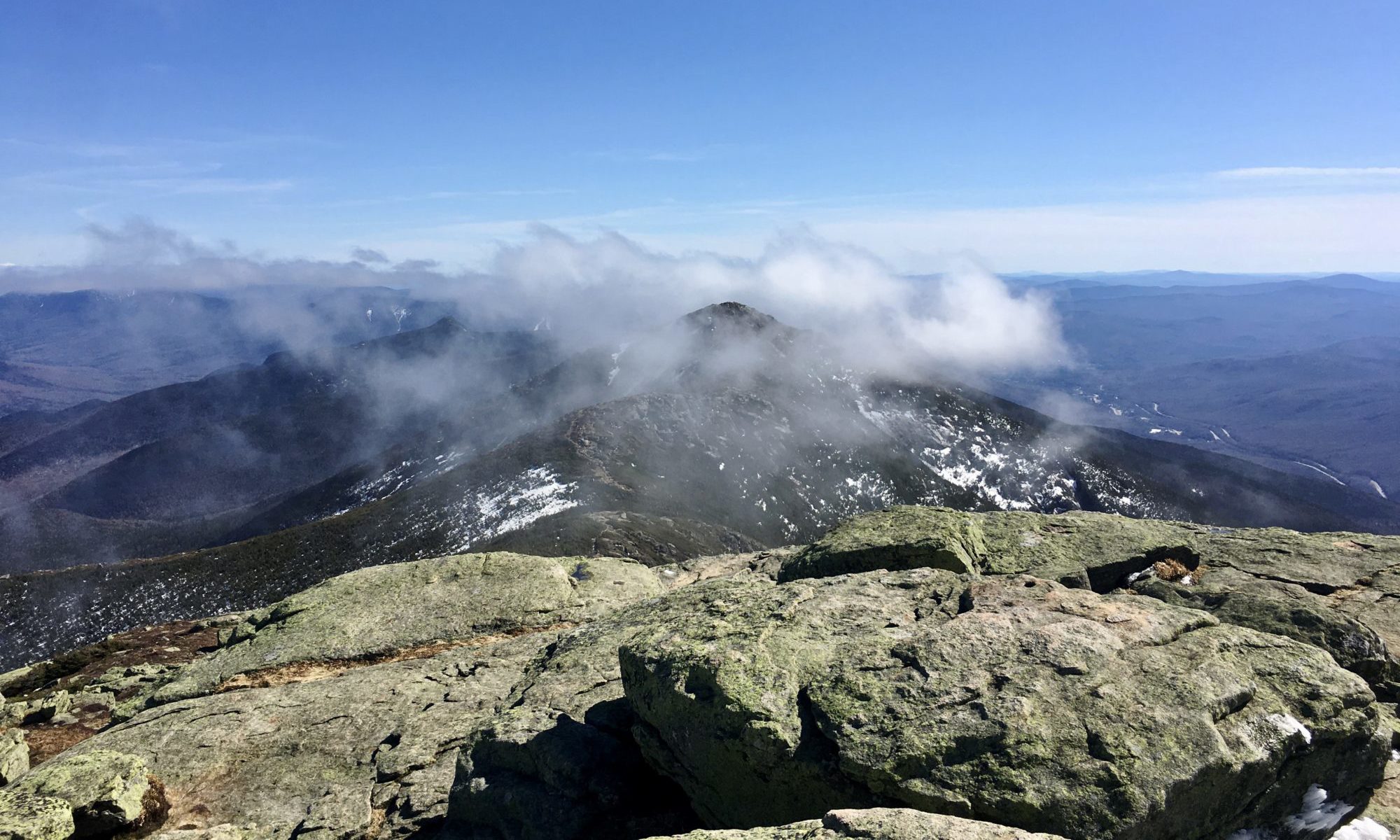
Last week in The Raven, we described Summit Steward Whitney Lee’s proposal for improving the South Lincoln Scrambles as a first step toward a more sustained approach to alpine trail management. This past weekend, we began putting that proposal into practice.
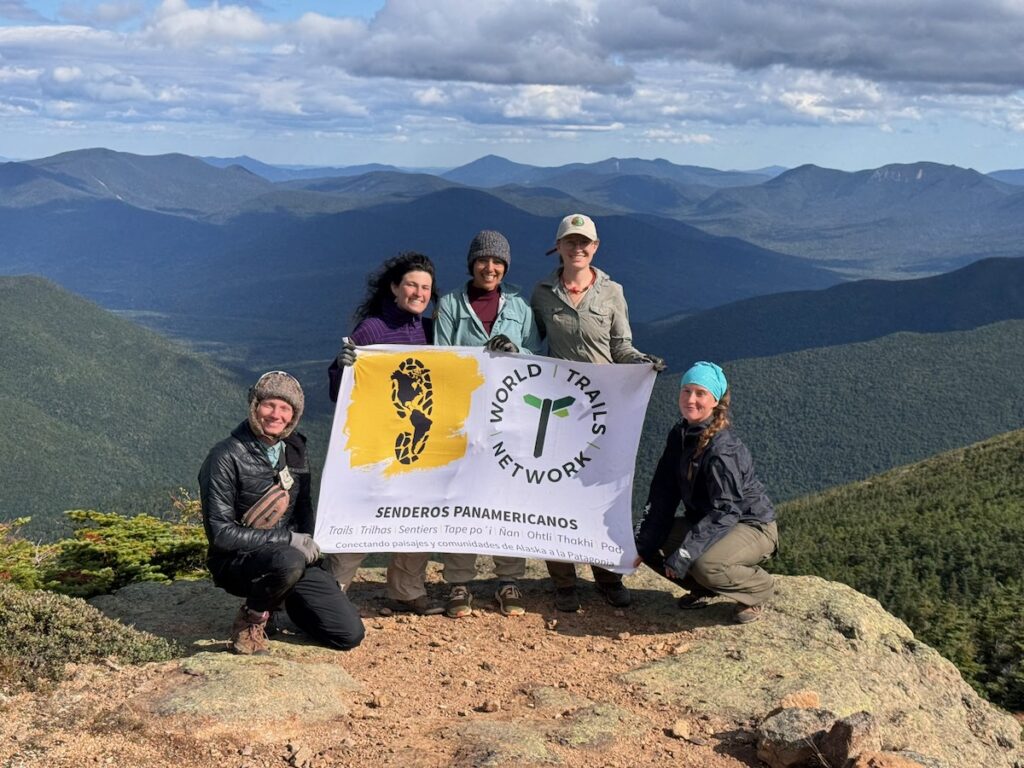
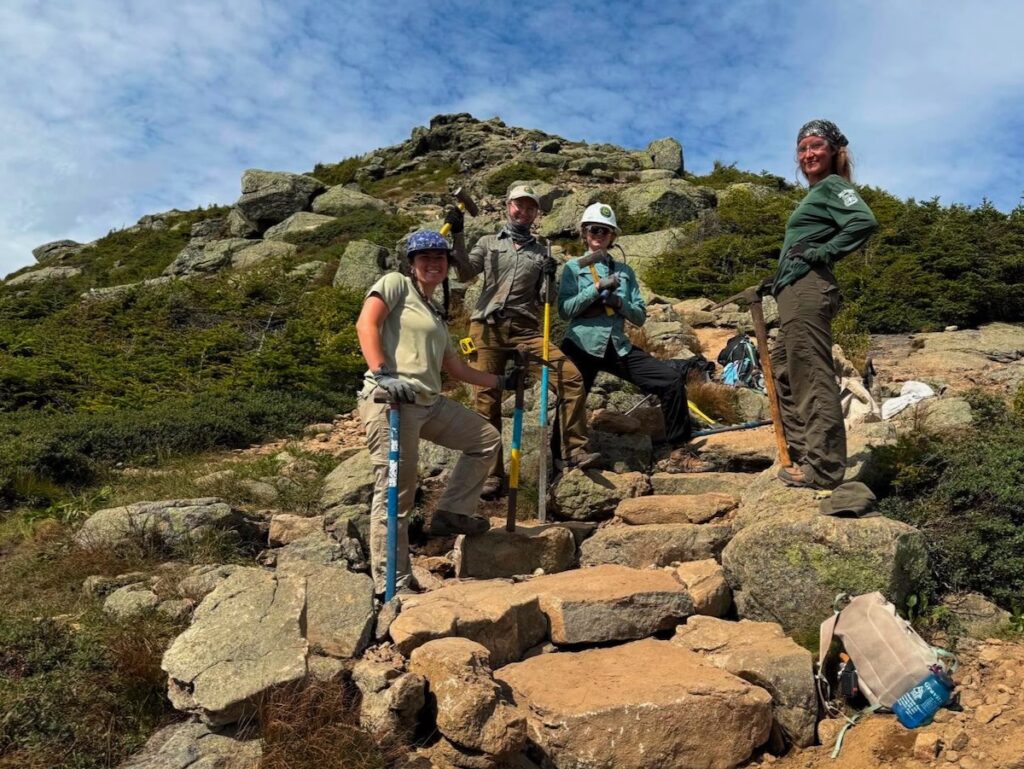
From August 14–16, Whitney led a full crew on the south side of Mount Lincoln, including Summit Stewards Kenna Brochu and Demi Terry, Summit Steward Intern Sarah Heller, International Trails Fellow Ipsi Castillo, and volunteers Bob White and Nat Scrimshaw.
The work was a first test of a central part of Whitney’s proposal: training Summit Stewards to devote a portion of their time to increasingly skilled trail work. With a crew that spends the season on the Ridge, observing both the trail and how people use it, restoration can become an ongoing part of stewardship rather than something that happens only during occasional major trail projects, like the Partnership to Restore the Franconia Ridge Loop. This is similar to what Nat Scrimshaw proposed last year in his essay, The Future of Franconia Ridge Trail Work.
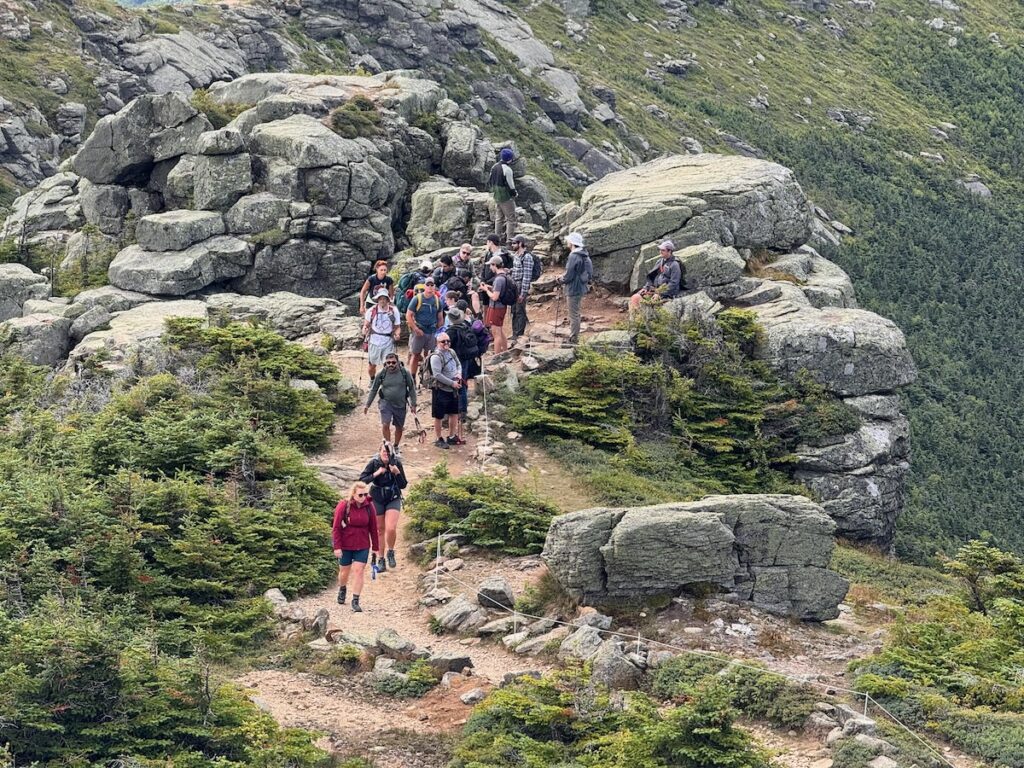
The project focused on the lower third of the steep ascent toward Mount Lincoln, an area identified during this summer’s White Mountain Environmental Field School (WMEFS) trail audit as a major off-trail hotspot. The existing trail here is steep, poorly defined in places and surrounded by a broad area that has already been disturbed by hikers.
Starting with the Steps
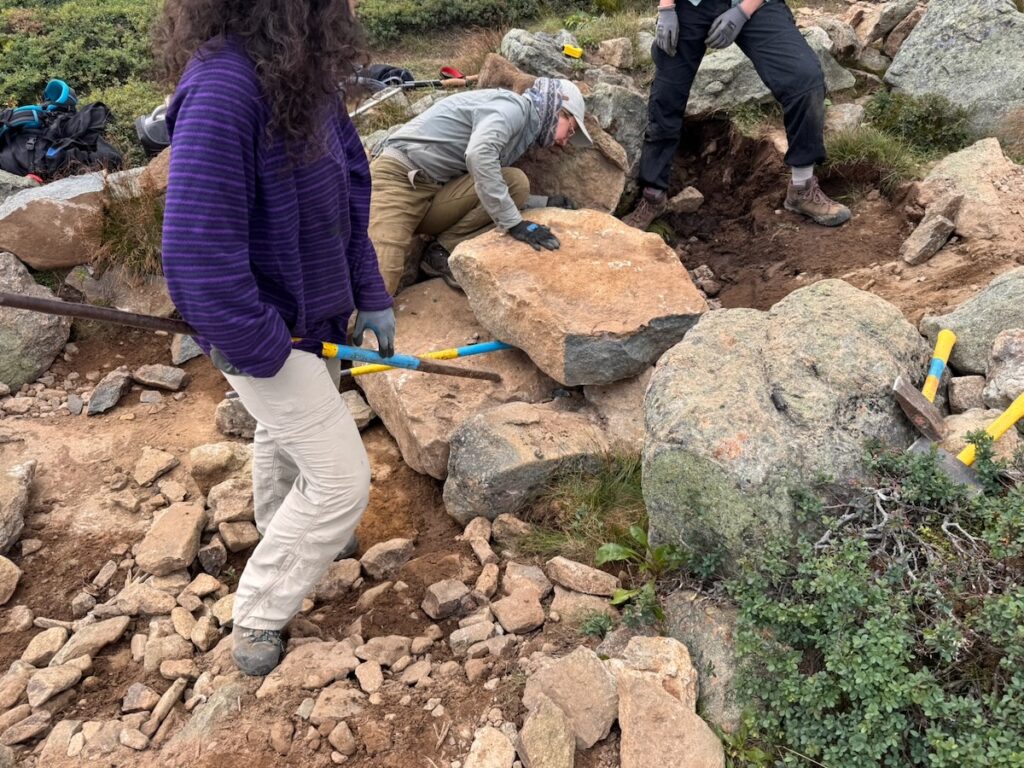
Work began Friday morning with removal of the existing deteriorating rockwork and quarrying stones for a new set of steps.
One of Whitney’s recommendations from the WMEFS symposium was to reconstruct high and awkward steps that can contribute to hikers moving around the constructed tread. The new staircase consists of seven overlapping steps, none more than seven inches high. The crew spent much of Saturday making and packing rock crush into the tread and behind the stones.
All of the work was done within the existing area of disturbance—the approach to Lincoln is severely trampled, giving us the freedom to work without disturbing vegetation on either side of the trail. Our hope is that if we can keep people on the trail, these areas will eventually revegetation.
The goal was not simply to replace deteriorating stonework. We wanted to create a tread that works better for the volume and movement of hikers we now see on Franconia Ridge.
Giving Hikers Somewhere to Go
The crew also constructed a new pullout beside the trail.
This idea grew directly from observation. The previous week, Kenna, Sarah, Ipsi and Demi had constructed another pullout farther up the ascent at a location where hikers repeatedly left the trail to sit on a rock and rest. The steep grade makes stopping and passing difficult, and the new pullout provided a durable place for hikers to do something they were already doing without continuing to widen the disturbed area.
The second pullout was built using the same principle. Rather than creating a new destination, the crew worked within another already-disturbed social lookout where hikers commonly stopped.
One diapensia plant was still growing within the disturbed area. Instead of removing it, the crew built around it, using a low scree wall to create a small plant island within the pullout.
This is an important part of the approach we are testing. On a trail carrying large numbers of people, some hikers are going to stop, rest, take photographs and allow others to pass. Trail tending can help direct those behaviors toward durable surfaces rather than simply trying to prevent them.
Scree Walls and String Fencing
The project also gave us an opportunity to put some nuance around another of Whitney’s recommendations.
Whitney has suggested reducing the amount of Summit Steward time spent repeatedly rebuilding scree walls where they have proven ineffective. That does not mean abandoning scree walls. They remain useful where they have a clear purpose and can be maintained effectively.
During this project, the crew reinforced approximately 35 feet of existing scree wall and constructed another 40 feet around the new pullout, including the wall protecting the remaining diapensia.
At the same time, we expanded a tool that has proven particularly effective at defining the trail corridor: string fencing.
Approximately 100 feet of new string fencing was installed near the base of the South Lincoln ascent. The fencing gives hikers a much clearer indication of where the trail is intended to go while remaining relatively light on the landscape.
Together, the steps, pullouts, scree walls and string fencing serve different purposes. The question is not which single technique should replace the others, but how each can be used where it works best.
Seven Steps and a Beginning
By Sunday, the crew had completed the new staircase and its foundation, finished the pullout and plant island, reinforced and constructed scree walls, and installed the new string fencing.
The final tally was:
➔ 7 new stone steps, none higher than seven inches
➔ 1 new pullout in an existing disturbed area
➔ 35 feet of reinforced scree wall
➔ 40 feet of new scree wall around the pullout
➔ Approximately 100 feet of new string fencing
Those numbers tell only part of the story.
The more important question is what happens now.
Will hikers stay on the reconstructed steps? Will they use the pullouts rather than stepping into adjacent areas? Will the string fencing make the intended trail sufficiently obvious? Where will off-trail travel continue?
We can now observe the site and find out.
That is what makes the Lincoln Scrambles South more than another weekend of trail work. It connects the day-to-day tradition of trail tending with research, skilled restoration and continued observation. We identified a problem, made changes based on what we had learned, and now have the opportunity to see whether those changes work.
There will undoubtedly be things we need to adjust. That is part of the point. Our “new paradigm” is, in some ways, a return to the older tradition of trail tending that trail clubs have practiced for generations, but with some new emphases. We see alpine trail management as an integrated and adaptive process that includes not only trail construction and ongoing maintenance, but also visitor education and information through onsite stewards and signage, coupled with continuous observation and monitoring. What we learn from watching how hikers respond can then lead to adjustments, new interventions, and, when necessary, redesign. The work is never really finished; tending the trail means continuing to observe, learn, maintain and adapt.