On the Old Bridle Path this summer, one of the most important parts of the work has been bringing professional trail builders, volunteers, partner organizations, and different kinds of expertise together around a common design.
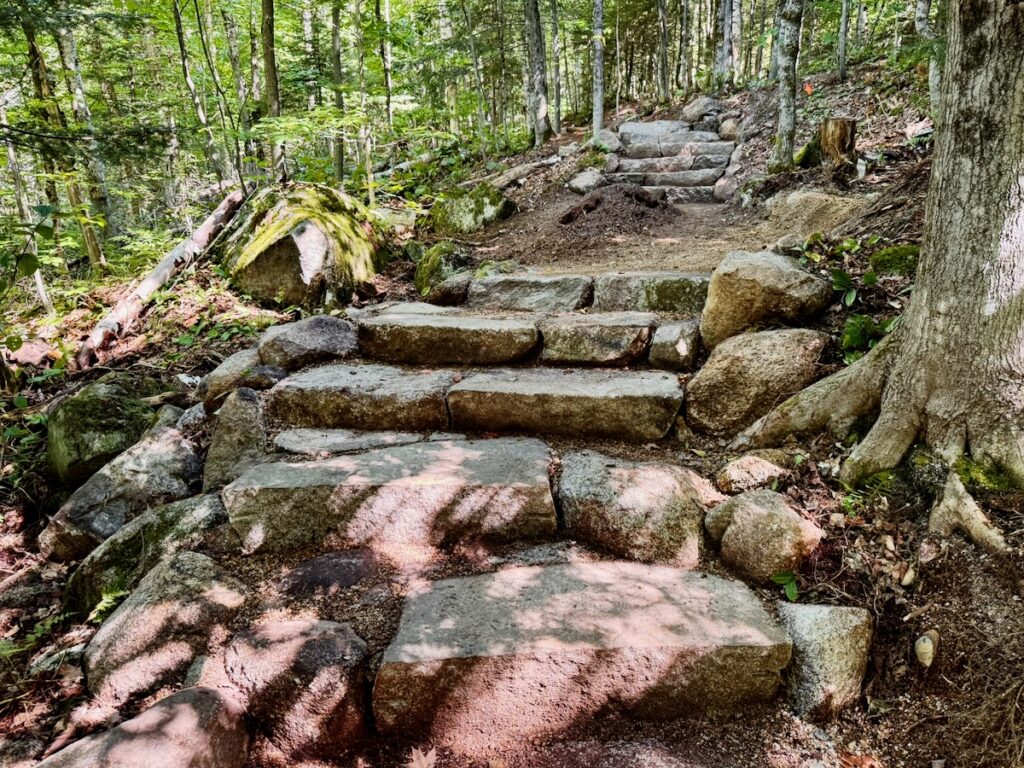
This is the fourth year of WTN Americas/Pan American Trails’ work on the Old Bridle Path in Franconia Notch State Park. Through the Alpine Stewardship Center, WTN Americas/Pan American Trails is sponsoring and overseeing the continuing reconstruction of the trail. Our professional trail crews, Peter S. Jensen & Associates LLC and Trail Fixing Collective LLC (TFC), have been tackling the technically demanding construction: building clusters of stone steps, rock cribbing, reverse grade drainages, and, in some places, armoring the tread with tightly fitted, almost Inca-like stone paving.
But professional construction is only part of the story.
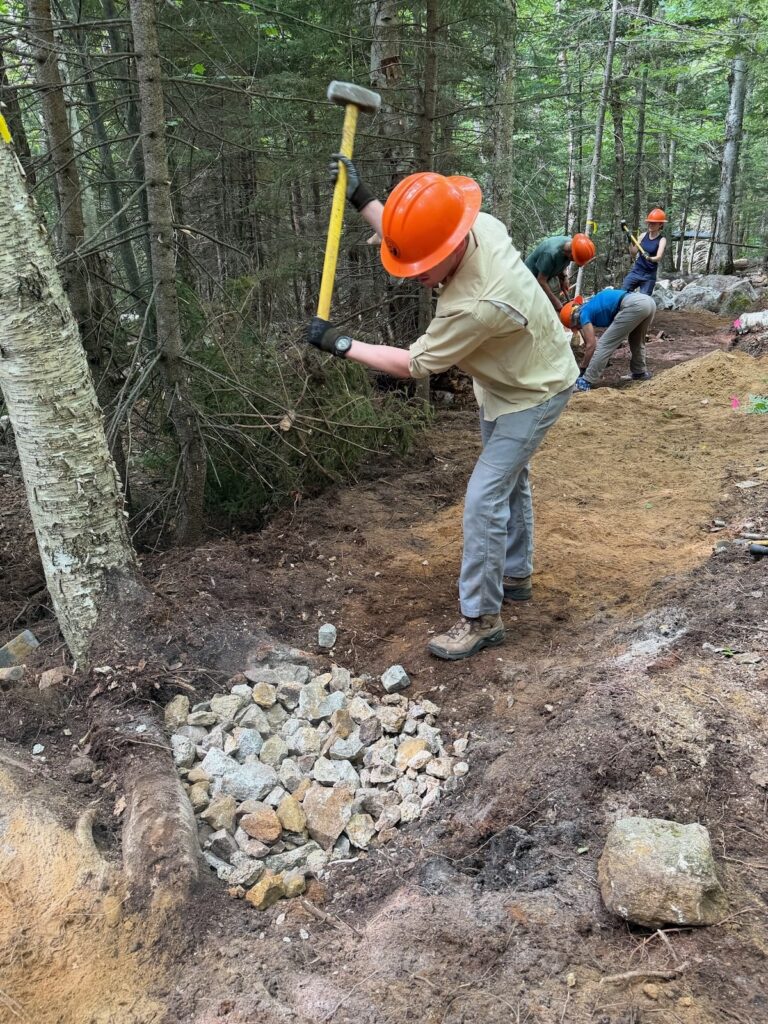
This season we have also sponsored ten volunteer trail days in partnership with the Appalachian Mountain Club, under the project leadership of Robert White. These workdays have become an integral part of the construction process, with volunteers preparing trail corridor, moving enormous quantities of mineral soil and rock, excavating roots, benching and grading tread, and completing work that allows the professional builders to concentrate their time and specialized skills where they are most needed.
The partnership plays to the strengths of both organizations. WTN brings its focus on sustainable trail design and professional trail construction, while AMC brings decades of experience recruiting, organizing, training, and leading volunteers. Rather than operating as two parallel efforts, the professional and volunteer crews have increasingly worked as parts of the same construction sequence.
The last two volunteer days show just how much that can accomplish.
Dirt, Roots and Rock: Volunteer Day #8
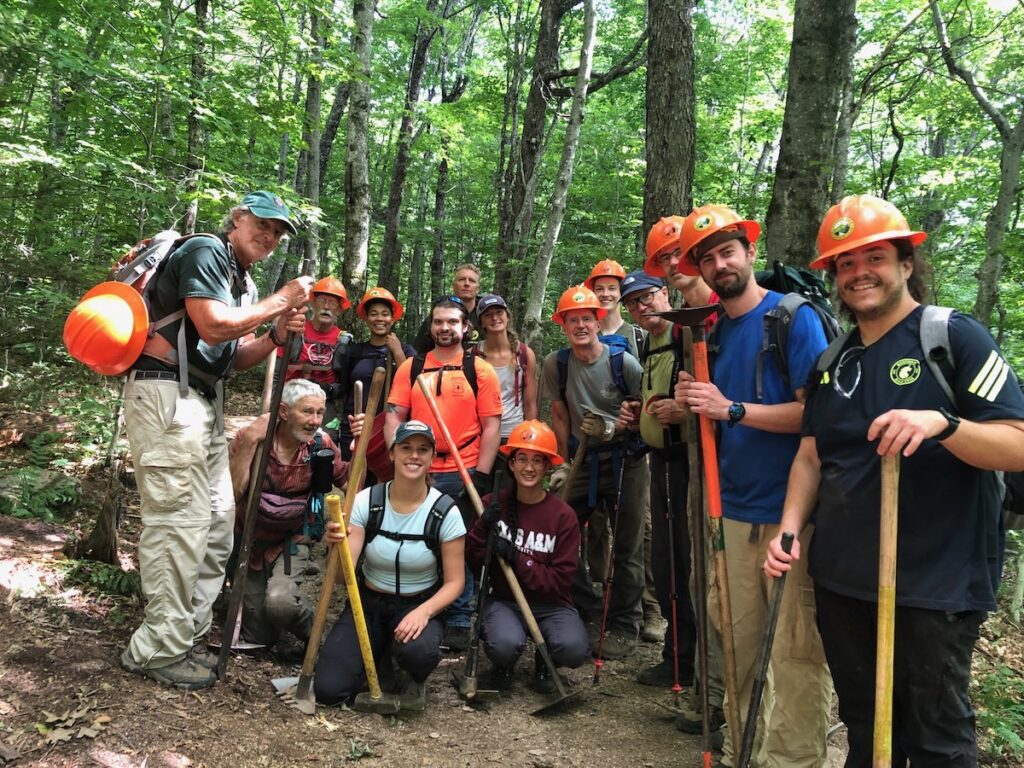
On August 15, 15 volunteers and three staff spread out across several sections of the Old Bridle Path.
One crew tackled what might best be described as the trail’s underground nervous system, removing approximately 100 feet of dense root mat with sawzalls, pick mattocks, and grubbing tools. Volunteers then benched and regraded roughly 150 feet of tread, preparing it for future resurfacing.
Elsewhere, the day’s work became a bucket brigade. Volunteers moved approximately 350 gallons of mineral soil onto the trail and used it to resurface and finish about 35 feet of tread.
Meanwhile, a crew led by Ken worked on Relocation #3, placing an extraordinary 1,000 gallons of mineral soil for future grading and resurfacing and collecting large rocks that will eventually become crib walls and other trail structures.
None of these jobs stands alone. Soil has to be found, excavated, moved, and staged. Rocks have to be gathered before they can be built into structures. Roots and organic material have to come out before durable mineral tread can go in. The finished trail may eventually look simple, but underneath that simplicity is a remarkable amount of coordinated labor.
Punching Through: Volunteer Day #9
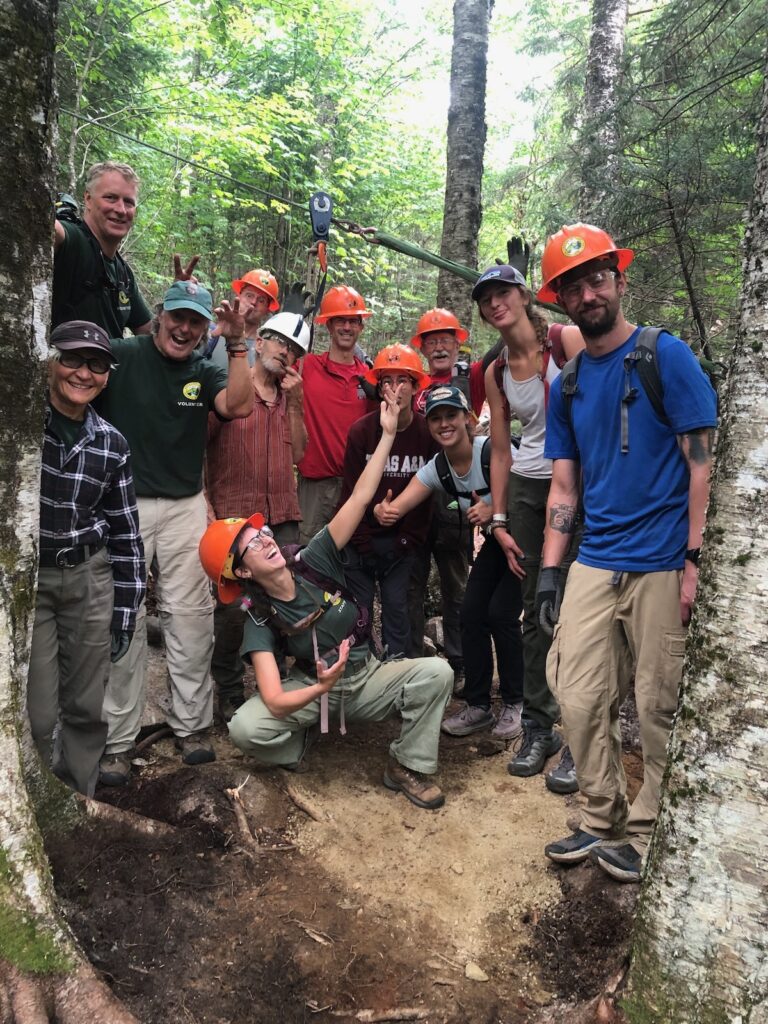
A week later, on August 22, 12 volunteers and two staff returned for the ninth workday of the season.
This time, one crew concentrated on renovating approximately 70 feet of the existing Old Bridle Path, removing rocks and roots, filling voids with fresh soil, and more clearly defining the tread. Renovating an old trail can be less predictable than constructing a new one. Once the digging starts, roots, buried rocks, soft spots, and other surprises emerge from beneath decades of use.
On Relocation #4, volunteers discovered and opened two new mineral-soil pits, excavating and transporting more than 450 gallons of soil. They also produced more than six cubic feet of crushed rock for filling voids beneath the finished tread, then benched and graded another 45 feet of trail.
By the end of the day, Relocation #4 had been punched through to the old trail, an important milestone in connecting the new construction.
A smaller three-person crew continued work on Relocation #3, moving another roughly 450 gallons of mineral soiland producing at least six cubic feet of crushed rock for the developing tread and crib wall.
Add the two days together and the scale becomes easier to see: hundreds of feet of trail prepared or renovated, large quantities of rock gathered and crushed, and more than 2,000 gallons of mineral soil moved by hand.
That is a lot of buckets.
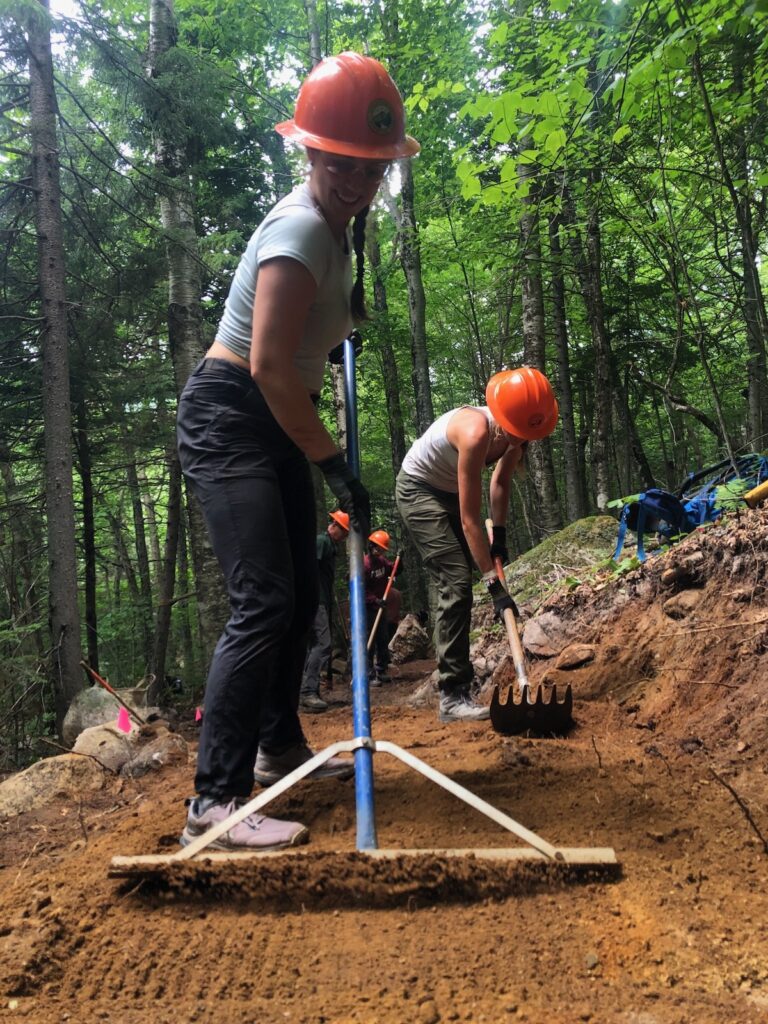
One Trail, Many Hands
Perhaps the most encouraging part of this season has been how seamlessly the volunteer effort has complemented the work of the professional trail builders.
The professional crews provide the technical expertise necessary for the Old Bridle Path’s more complex structures and for translating sustainable trail design into stone and soil. Volunteers greatly expand what can be accomplished around that work: opening corridor, preparing tread, excavating and transporting materials, rehabilitating existing trail, and advancing relocations so that professional builders can move efficiently from one technical challenge to the next.
The result is not professional trail building on one side and volunteer trail work on the other. Increasingly, it is one trail-building effort, with different crews contributing different skills to the same project.
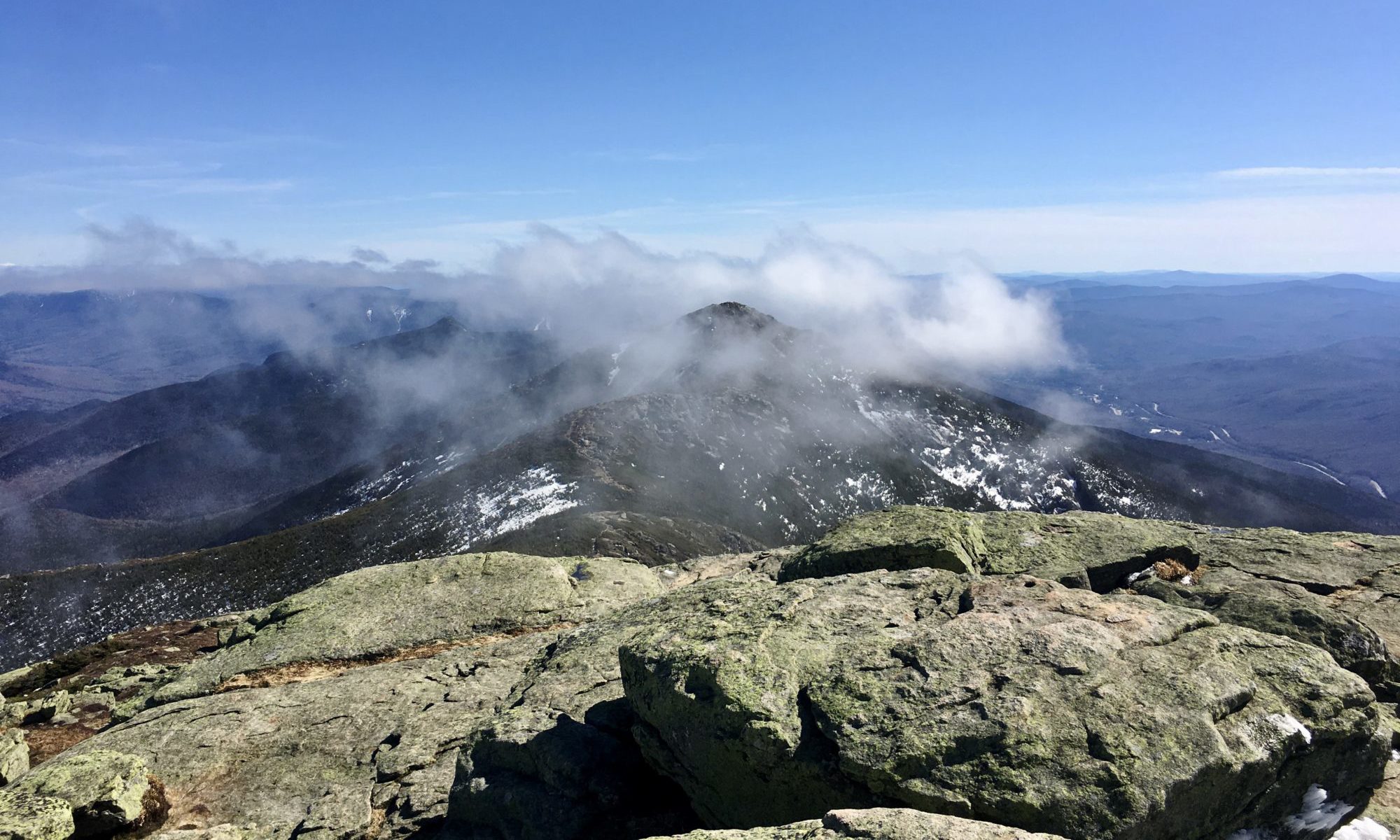
The tenth and final scheduled AMC-WTN volunteer workday of the season is September 5, but that will not mark the end of this year’s construction. Our professional crews will continue working on the Old Bridle Path into October.And while four years of work have been concentrated on the Old Bridle Path, the larger effort is beginning to move around the Franconia Ridge Loop: next year we plan to begin work on the New Hampshire State Parks section of the Falling Waters Trail.
In the next Raven, we’ll turn our attention more fully to the professional side of the work: the stone steps, crib walls, armored tread, and other structures gradually transforming this heavily traveled White Mountain trail.
For now, though, it seems appropriate to celebrate the volunteers who have supplied the buckets, mattocks, muscles, persistence, and many hundreds of gallons of dirt that make that transformation possible.